

A national forum held in Cotonou on November 29, 2025, served to validate ten major recommendations stemming from local citizen consultations, aiming to anchor AI development in the realities and needs of communities.
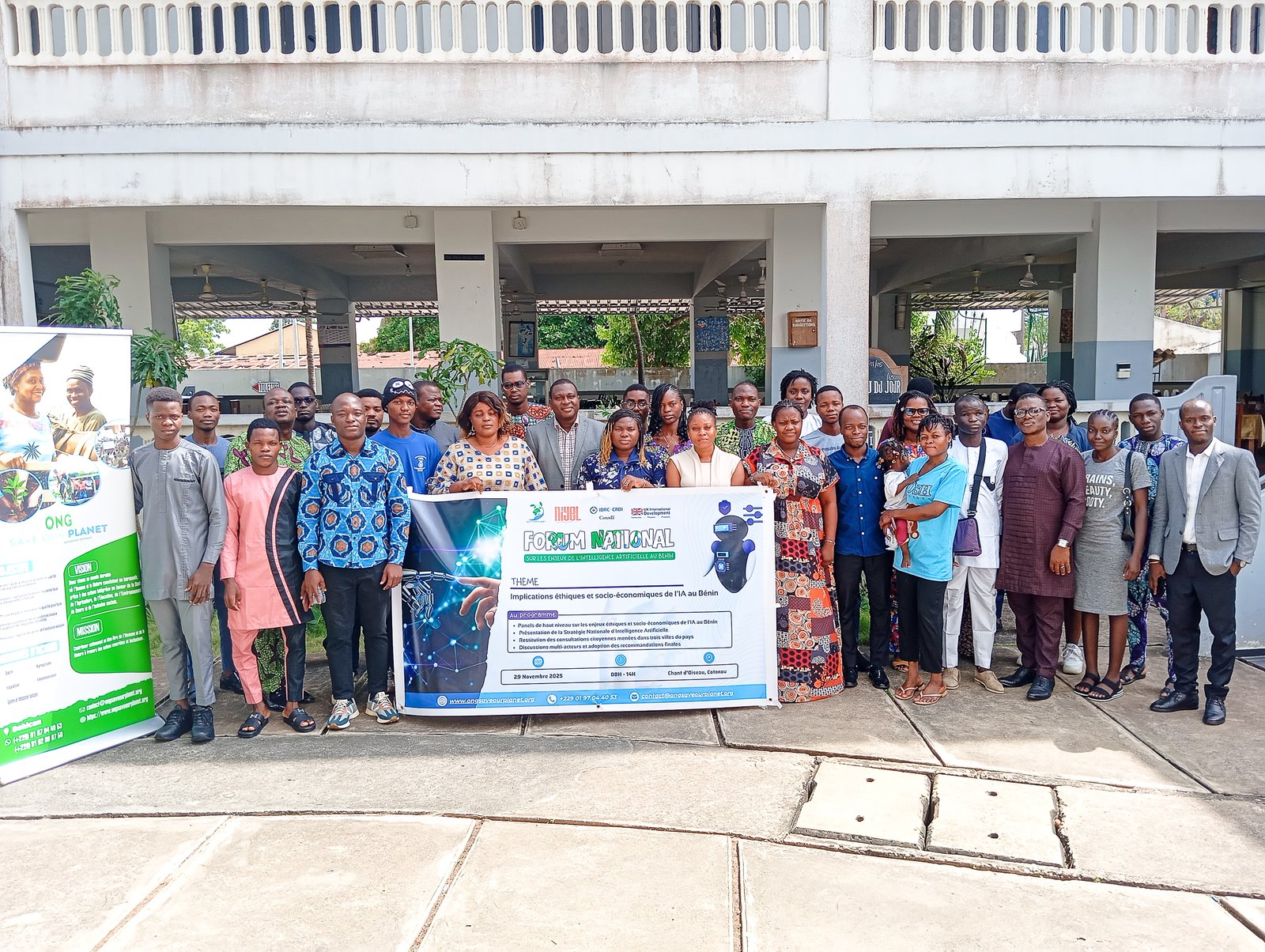
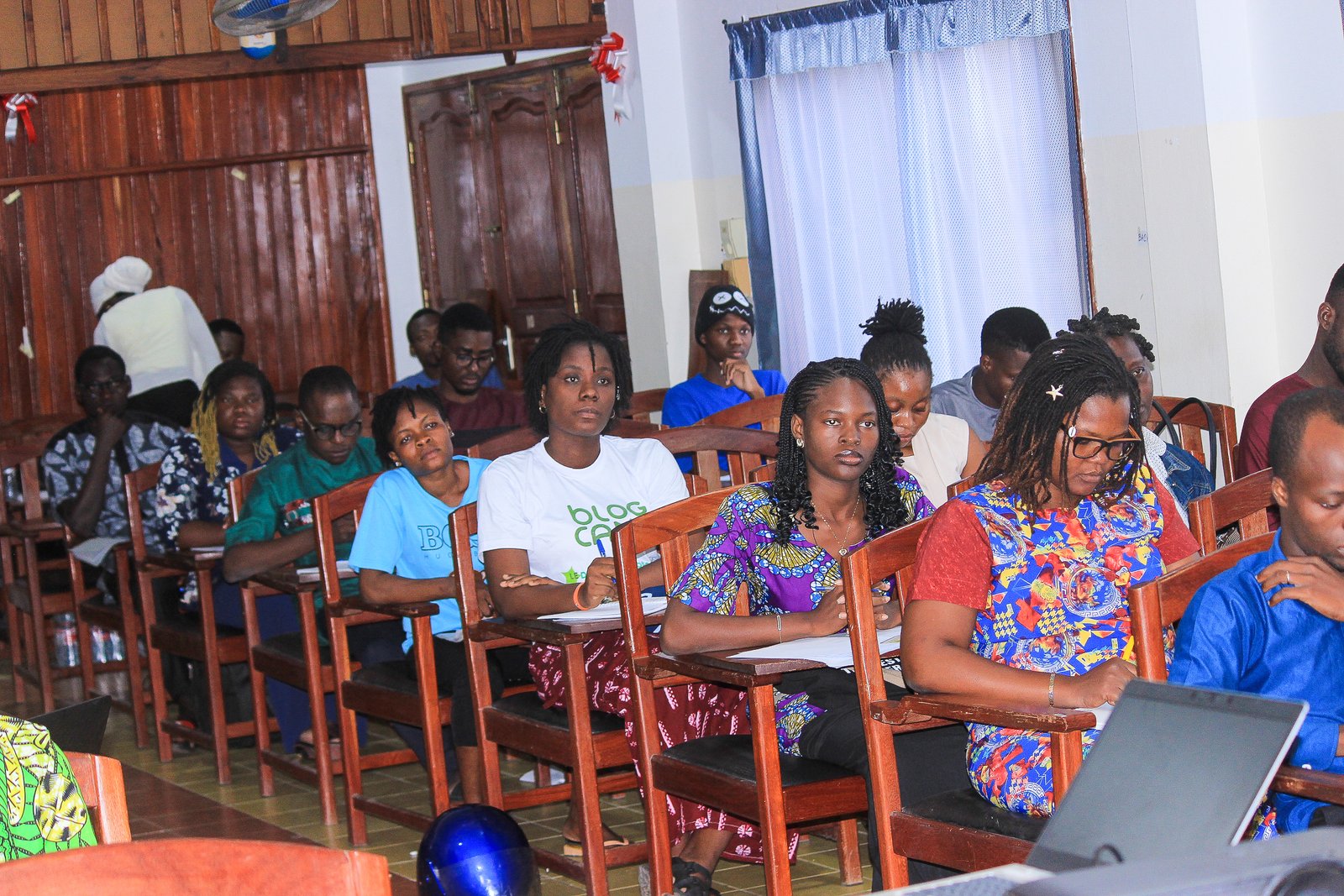
How can we ensure the Artificial Intelligence (AI) revolution benefits everyone and does not deepen social divides? This crucial question was addressed at the national forum organized by the NGO Save Our Planet on Saturday, November 29, 2025, at Chant d’Oiseau in Cotonou. The event, which brought together actors from the private sector, civil society, universities, and state representatives, marks the culmination of an extensive consultative process for the inclusive and ethical development of AI in Benin.
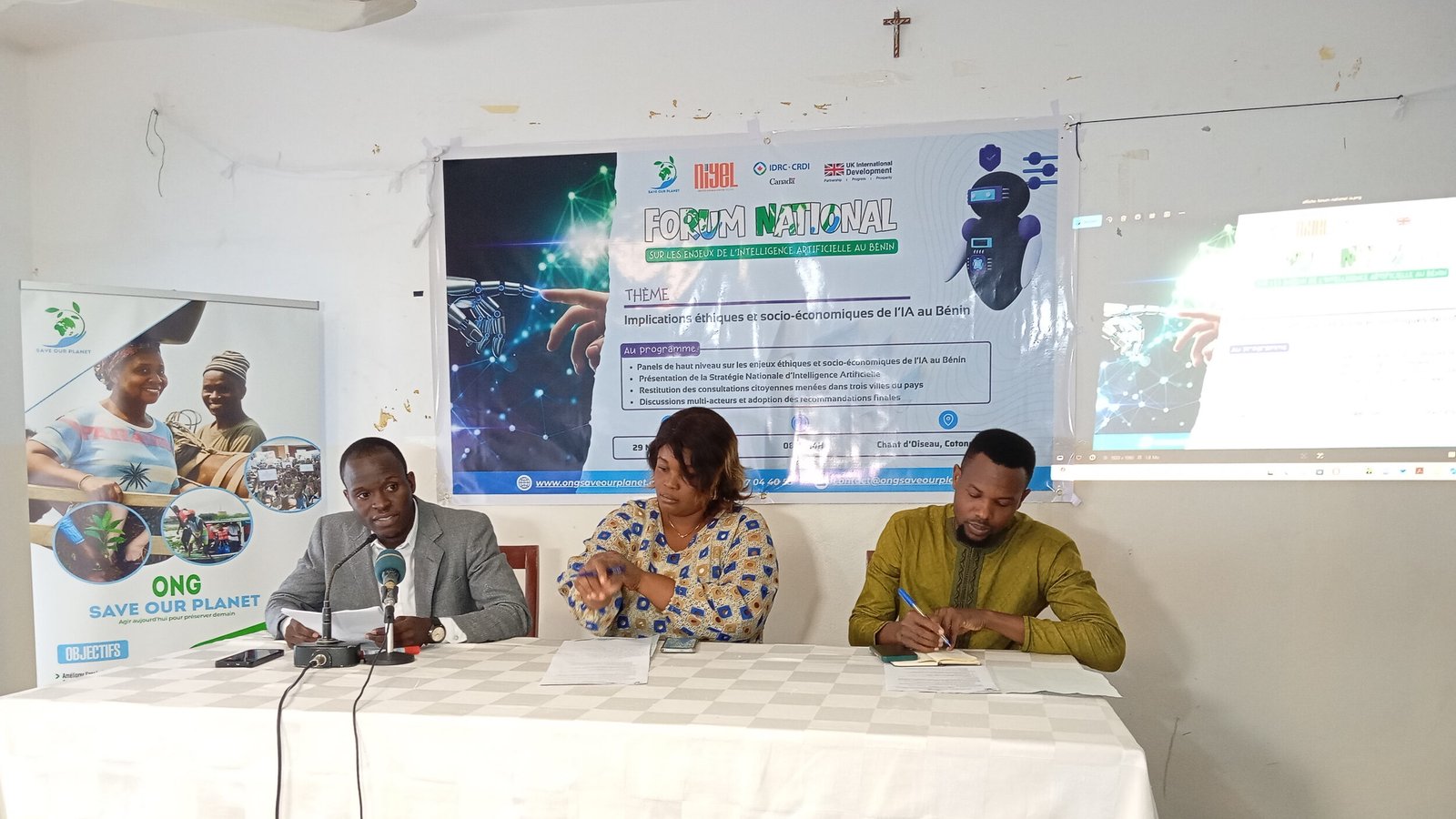
At the opening ceremony, Megan Valère Sossou, Executive Director of Save Our Planet, presented the forum as « the culmination of an unprecedented participatory process. » Since September 2025, consultations conducted in the North (Parakou), Center (Bohicon), and South (Porto-Novo) have gathered « the strong expectations and legitimate concerns of the population » on this strategic issue. He reiterated the threefold objective of the meeting: to share insights from the consultations, enrich the dialogue on the ethical and societal implications of AI, and validate recommendations for inclusive governance.
The Need to Place Humanity at the Core of Technology
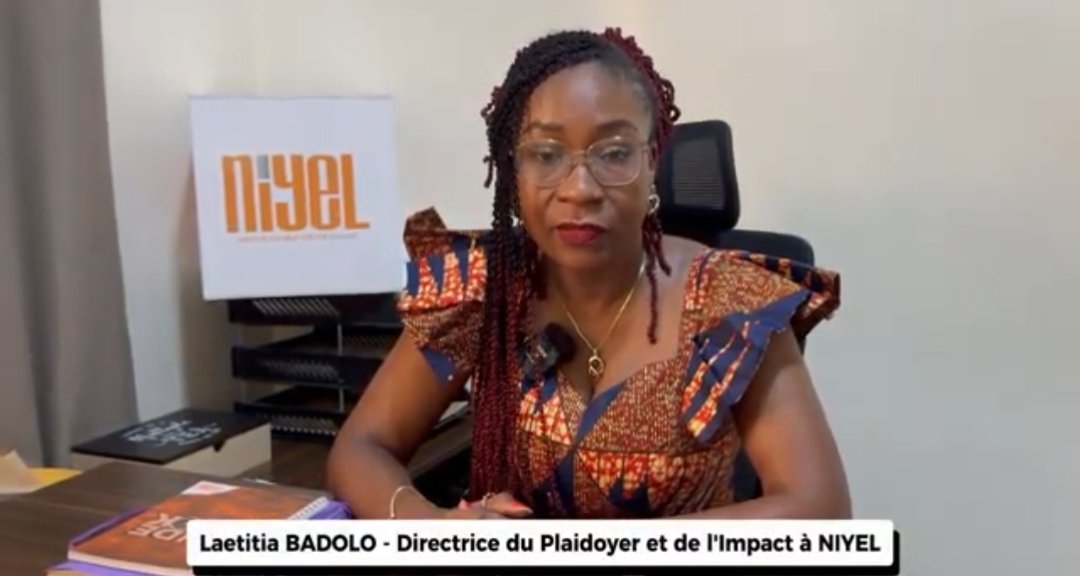
For Laetitia Badolo, Director of Advocacy and Impact at Niyel (a project partner), this dialogue is vital. « In a context where AI is redefining public services and ways of life, it is essential that citizens, local communities, youth, women, and vulnerable groups can express their expectations […] It is these contributions that enable public policies to be anchored in reality, » she emphasized. This forum thus constitutes a key step in bringing this citizen voice to the institutional level.
The representative of the Ministry of Digital and Digitalization, Martial Ahehehinnou, praised the NGO’s « remarkable initiative, » highlighting its alignment with the National Strategy for Artificial Intelligence and Big Data championed by the government.
Decoding the Issues and Citizen Vigilance
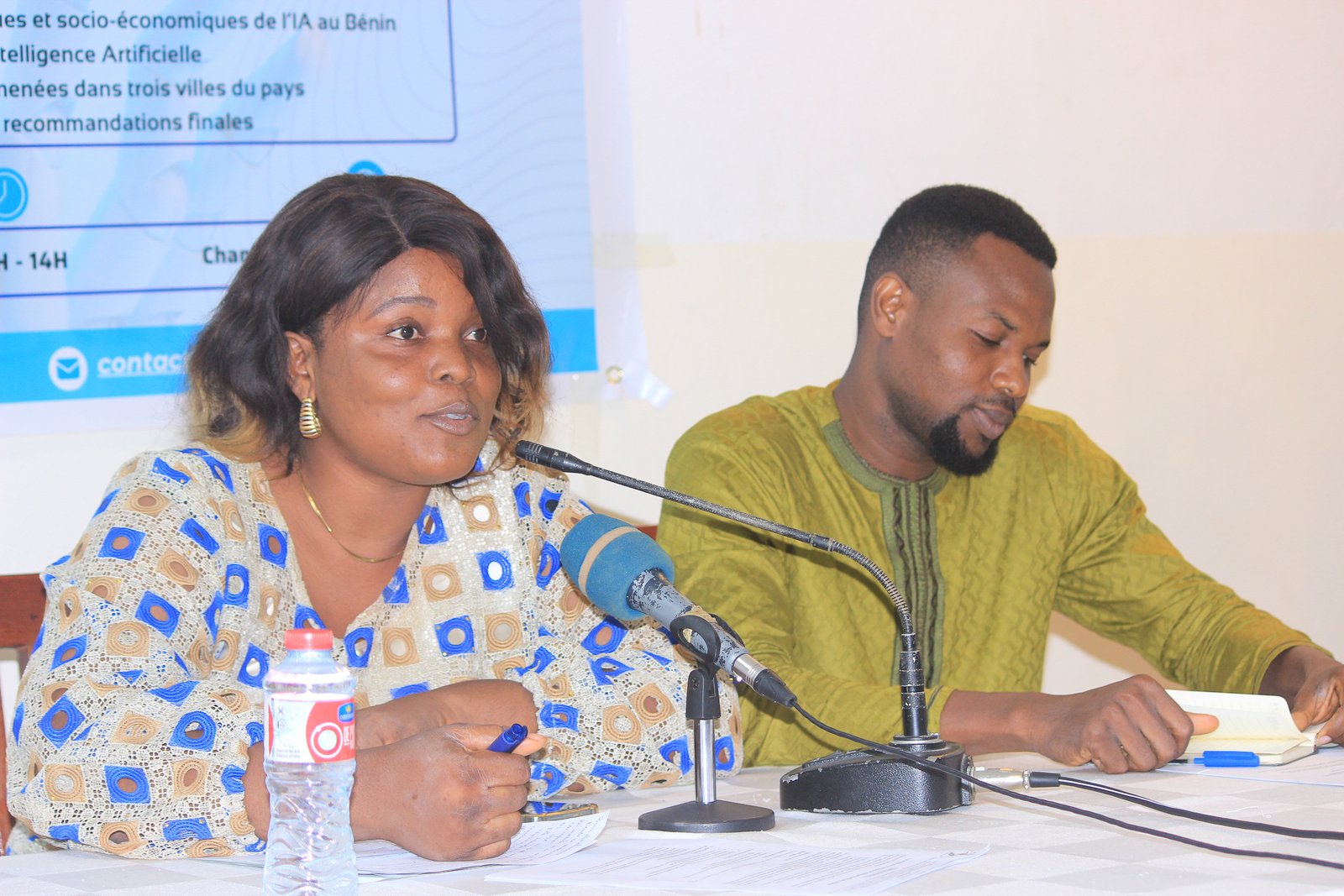
A discussion panel moderated by Dr. Mireille ODOUNFA, an AI and Agriculture Expert, and Martial Ahehehinnou, provided an opportunity to dissect the concrete implications of this technology. The focus was on the necessity of directing it towards solving local challenges.
For Fulbert Adjimehossou, Consultant Trainer, artificial intelligence must be more human, serving socio-economic, health, and agricultural needs, rather than remaining merely a technology. An opinion shared by participants like Serge Anagonou: « It is no longer possible to do without AI […] If we are to take part in this revolution, we must reframe it, reconsider it on a national level so that it responds to our realities. »
For participants like Géraud Koudakpo and Floriane Aikobinou, the outcome is clear: they are now « better equipped on the issues of AI and the need to make it more inclusive. »
Ten Pillars for an Inclusive Roadmap
The concrete outcome of the forum was the refinement and consensus-based validation of ten key recommendations. These outline a roadmap centered on several fundamental pillars: A national and multi-stakeholder governance framework inclusive of all actors; strengthening digital literacy and training for all; the imperative of transparency, accountability, and regulation of AI systems; a sectoral prioritization (health, agriculture, education) focused on equity; data governance that protects citizens’ rights; and the strengthening of solidary international cooperation.
This advocacy project, supported by the Niyel agency and funded by the International Development Research Centre (IDRC) and UK International Development, lays the first stones of a Beninese model for AI development, where technology is harnessed for inclusion and human progress.